
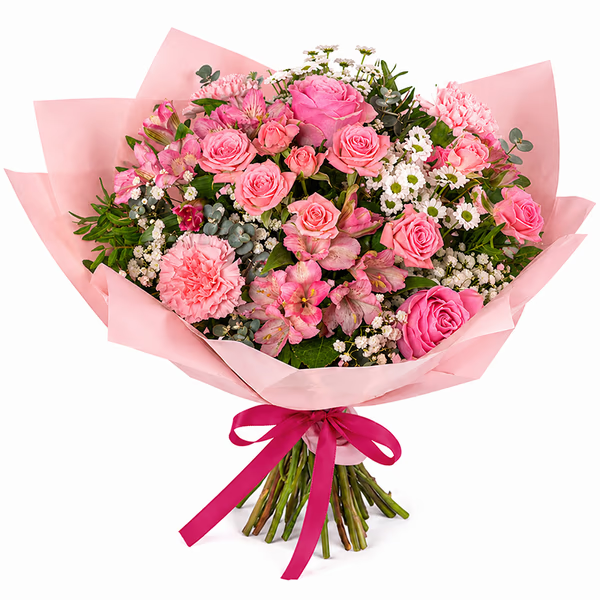
Pink Harmony
Daisy: The Flower of Simplicity and Innocence
Daisies are cherished for their cheerful look and association with purity, innocence, and new beginnings. Featuring white petals around a yellow centre, they symbolise positivity and are popular in spring and summer arrangements. Thriving in meadow-like settings, they evoke natural beauty and freedom. Their bright, modest charm makes them a favourite for joyful, simple celebrations.


COMMON NAME
Daisy

BOTANICAL NAME
Bellis perennis (common daisy)

ORIGIN
Europe and temperate regions of Asia

PEOPLE ALSO CALL IT
Lawn Daisy, English Daisy

FLOWERING TIME
Spring through summer

ASPECT
Full sun to partial shade

SYMBOLISM
Purity, innocence, new beginnings, cheerfulness
Daisy vs. Oxeye Daisy (Marguerite)
Note: in Poland, the word "stokrotka" (daisy) is commonly used informally for both the small common daisy and the larger oxeye daisy (margaretka/margerytka). In bouquets and floral arrangements, you will most often find oxeye daisies, which have a similar, sunny appearance. But they are actually considered differnt plants from the same family.
Why are common daisies not popular in bouquets in Poland?
The common daisy (Bellis perennis) rarely appears in professional bouquets for several practical reasons:
Size: Common daisies are very small (1–2 cm in diameter), making them easy to overlook in arrangements and difficult to display effectively. Marguerites and gerberas, with similar symbolism, are many times larger and more visually striking.
Durability: Common daisies wilt quickly as cut flowers — much faster than marguerites or gerberas, making them an impractical choice for florists.
Availability: Common daisies are not commercially grown on a large scale as cut flowers — unlike marguerites and gerberas, which are more durable and available year-round.
Stems: Common daisies have short and delicate stems, making it difficult to create classic bouquets that require longer, more stable stems.
In practice, when someone in Poland asks a florist for "daisies in a bouquet", they most often mean marguerites — larger, more durable, and widely available flowers with a similar, sunny appearance.
Care Tips for Cut Daisies
Trim the Stems: Cut the stems at an angle before placing them in a vase to promote water absorption.
Remove Submerged Leaves: Strip any leaves that would sit below the waterline to prevent decay and bacteria growth.
Change Water Regularly: Replace the water every two to three days to keep the daisies fresh and prolong their bloom time.
Use Flower Food: Add floral preservative to help nourish the flowers and maintain their vitality.
Keep in a Bright Spot: Place the daisies in a bright location, but avoid direct sunlight and heat, which can cause them to wilt quickly.
Symbolism & Meaning
Daisies symbolise purity, innocence, and fresh beginnings, making them ideal flowers for weddings, baby showers, and spring celebrations. They are often associated with childhood and playfulness, reflecting their simple and joyful nature. The classic white petals of the daisy with its bright yellow centre evoke a sense of clarity and optimism, reminding us of sunny days and carefree times.