Gerbera: The Cheerful and Versatile Bloom
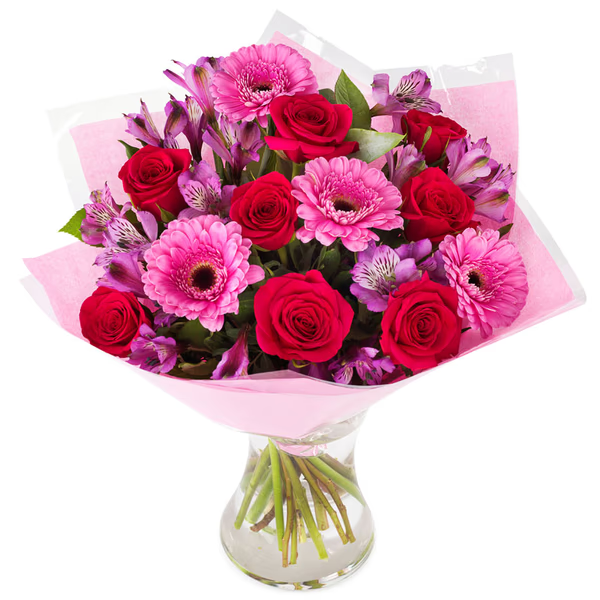
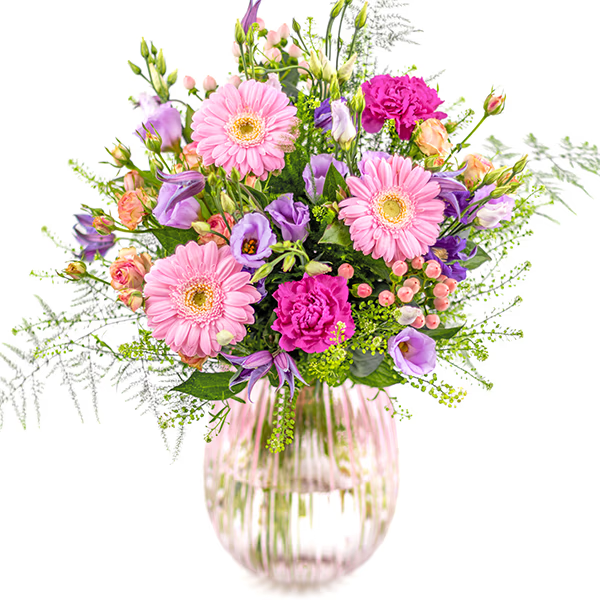
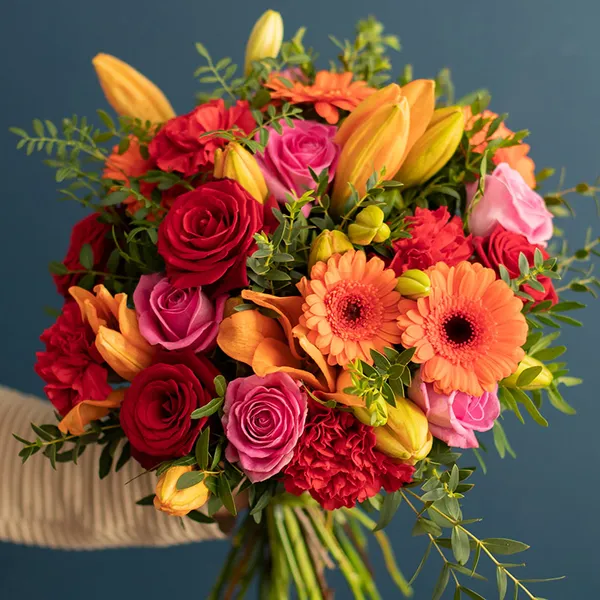
Gerberas are vibrant and cheerful flowers, known for their bold colours and large daisy-like appearance. They symbolise happiness, purity, and innocence, making them a popular choice for celebratory bouquets and uplifting arrangements. Available in a wide range of colours, including red, pink, yellow, orange, and white, gerberas add a pop of colour and joy to any floral arrangement. Their ability to convey warmth and positivity makes them a favourite for both casual and formal occasions.

COMMON NAME
Gerbera
BOTANICAL NAME
Gerbera jamesonii
ORIGIN
South Africa
FLOWERING TIME
Year-round, peak in spring and summer
ASPECT
Full sun
SYMBOLISM
Happiness, cheerfulness, purity, innocence
Care Tips for a Cut Gerberas in a Vase
Trim Stems at an Angle: Cut the stems at a diagonal to maximize water absorption.
Support the Stems: Place a floral wire or a tall vase to support the long, delicate stems and prevent drooping.
Use Fresh Water and Flower Food: Replace the water every two days, adding flower food to nourish the blooms.
Remove Submerged Leaves: Strip any leaves that fall below the waterline to avoid bacterial growth.
Keep in a Cool Spot: Avoid placing the vase in direct sunlight or near heat sources to prolong the life of the blooms.
Symbolism & Meaning
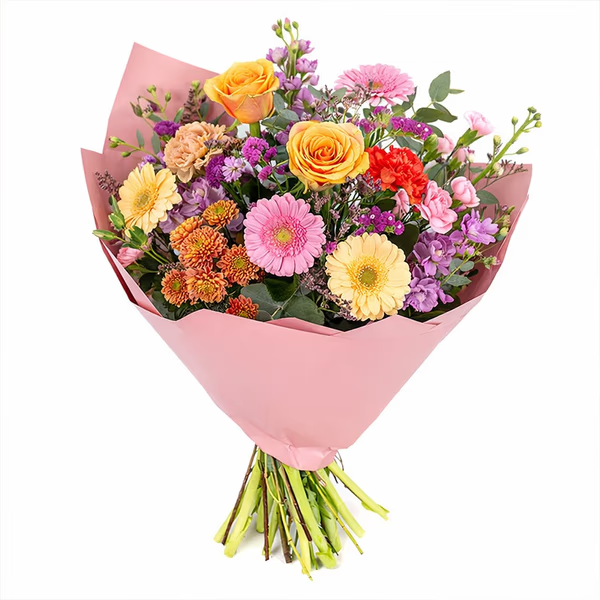
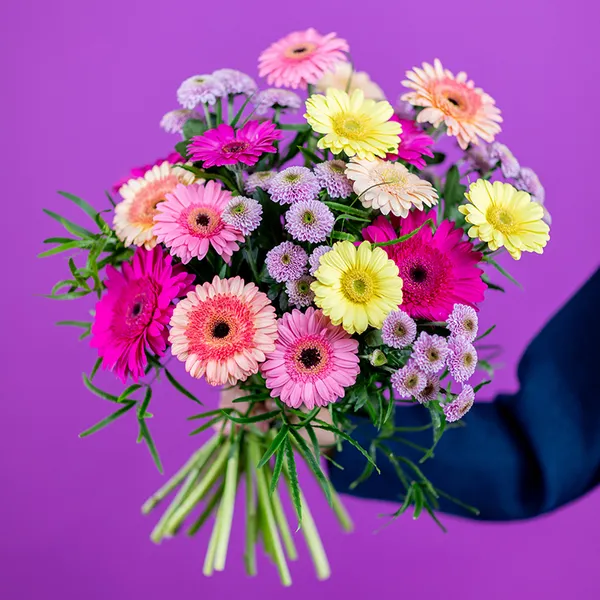
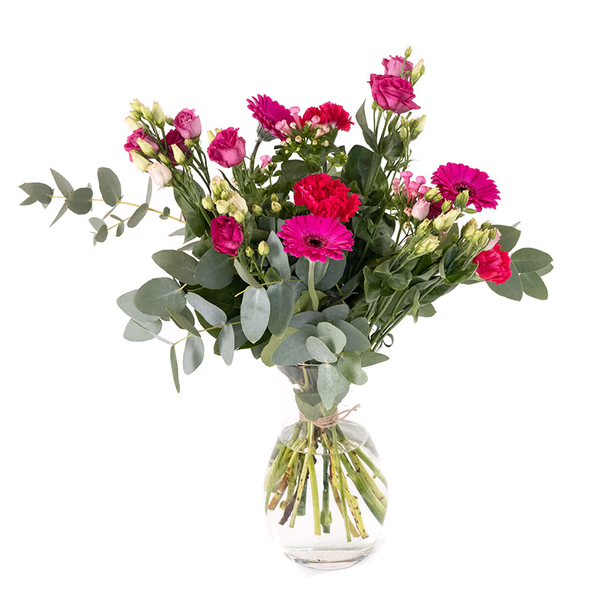
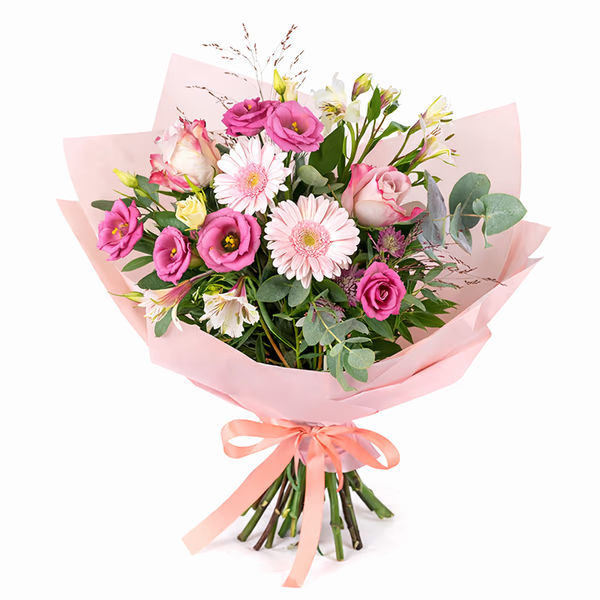
Gerberas are often associated with happiness, optimism, and purity. Their bright, cheerful blooms are a universal symbol of joy, making them a thoughtful gift for birthdays, congratulations, and thank-you gestures. Each colour has its own meaning: red represents love, yellow symbolises friendship and cheerfulness, pink conveys admiration, and white signifies purity and innocence. Their versatility makes them suitable for a wide range of emotions and occasions.
Types of Gerberas
Gerberas come in various forms, primarily distinguished by the arrangement of their petals. Single Gerberas have a single layer of petals around a large central disk, giving them a daisy-like appearance. Double Gerberas feature two rows of overlapping petals, creating a fuller look. Crested Gerberas have additional smaller petals forming a ring around the central disk, which gives them more texture and depth.
What Is the Difference Between Gerbera and Germini?
Although the names gerbera and germini are often used interchangeably, they do not mean exactly the same thing. Germini is simply a miniature variety of gerbera, developed for modern floristry and more delicate floral arrangements.
The name germini combines two words: "ger" from Gerbera and "mini" from miniature. It is a commercial and marketing term used by flower growers and wholesalers, particularly in the Netherlands, where most of the gerberas and germini sold in Poland and across Europe are grown. In botanical classification, germini does not exist as a separate species – it is simply a small gerbera.
In other words, every germini is a gerbera, but not every gerbera is a germini. It's similar to the relationship between a mandarin and a citrus fruit: a mandarin is always a citrus, but a citrus fruit is not always a mandarin.
In practice, when a florist says "gerbera," they may be referring to any type of gerbera, including germini. When they say "germini," they always mean a miniature gerbera with flowers typically measuring up to 6 cm (2.5 inches) in diameter.
If you're ordering flowers and care about bloom size, it's worth specifying whether you'd like standard gerberas or germini.
Gerbera vs. Germini
Flower Size
The most obvious difference is the size of the blooms. Standard gerbera flowers measure approximately 8–12 cm (3–5 inches) across. They are large, bold, and eye-catching. Germini flowers are much smaller, usually 3–6 cm (1–2.5 inches) in diameter. This size difference largely determines how each type is used in floral design.
Use in Bouquets
Standard gerberas are typically used as focal flowers. They attract attention and often define the overall character of a bouquet. They work beautifully as standalone flowers or as the dominant element in an arrangement. Germini, on the other hand, are usually used as supporting flowers. They add volume, colour, and texture without overwhelming other blooms.
They pair especially well with:
Roses
Lilies
Baby's breath (Gypsophila)
Eustoma (Lisianthus)
Eucalyptus
This makes them a favourite choice for natural, layered, and garden-style arrangements.
Vase Life
Both gerberas and germini are valued for their excellent vase life. With proper care they can remain fresh for 10–14 days.
Availability in Poland
Both standard gerberas and germini are available year-round in Poland, largely thanks to imports from Dutch greenhouse growers. Germini have become increasingly popular in recent years, particularly in wedding bouquets and boho-style floral designs, where their smaller blooms and wide colour range fit perfectly into natural-looking arrangements.
You can send gerbera bouquets to Poland easily and all year round.
Colours
Both flower types are available in an extensive colour palette. Germini are often available in bicolour and gradient varieties, making them especially attractive to florists looking for unique accents and colour combinations.
When Should You Choose Gerbera?
Choose a standard gerbera when:
You want the flower to be the main focal point of the arrangement
You're creating a simple or minimalist bouquet
You're looking for a striking single-flower gift
You want large, bold blooms that stand out
When Should You Choose Germini?
Choose germini when:
You're creating a mixed bouquet with multiple flower varieties
You want a fuller, more natural-looking arrangement
You're designing wedding or event decorations
You'd like to add colour and texture without dominating other flowers
You prefer airy, layered floral designs
Both gerberas and germini offer cheerful colours, excellent longevity, and versatility. The best choice ultimately depends on the style and effect you want to achieve in your bouquet.
Frequently Asked Questions About Gerbera
Germini is simply the trade name for "mini gerbera" — a smaller variety of gerbera, typically 3–6 cm in diameter. They are the same species or closely related hybrids, but bred and sold specifically for their smaller size.
No, gerberas are not frost-resistant. They are tender perennials that thrive in warm climates but cannot tolerate frost or freezing temperatures. If temperatures drop below 4°C, gerberas should be brought indoors or protected with covers. In colder regions, they are often grown as annuals or potted plants.
No, gerberas are not poisonous to cats. However, excessive chewing may still cause mild stomach upset, so it’s best to keep them out of reach of curious pets.