
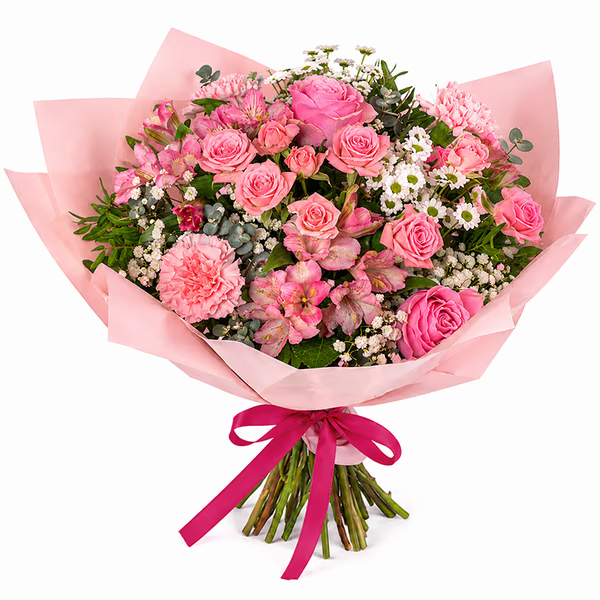
Pink Harmony
Colours Named After Flowers & Plants
A fruit can be a colour, so too can a flower or herb. Rose and peach are prime examples. One’s a flower and the other’s fruit, yet they’re also colours we can imagine at their mere mention. It’s good fun to notice when the colours we use to paint our walls or wear out and about are named after flowers and plants.
The herb sage came first, not the colour. The same goes for orange and lilac. A few of the colours we use came not from the plant but via dyes, such as indigo, and some names are more modern, such as eucalyptus.
Flower-named colours
Violet: Violets are tiny woodland flowers that sit between blue and purple on the colour scale.
Lilac: Pale purple with a touch of grey. These are spring blossoms, with a gentler tone than violet.
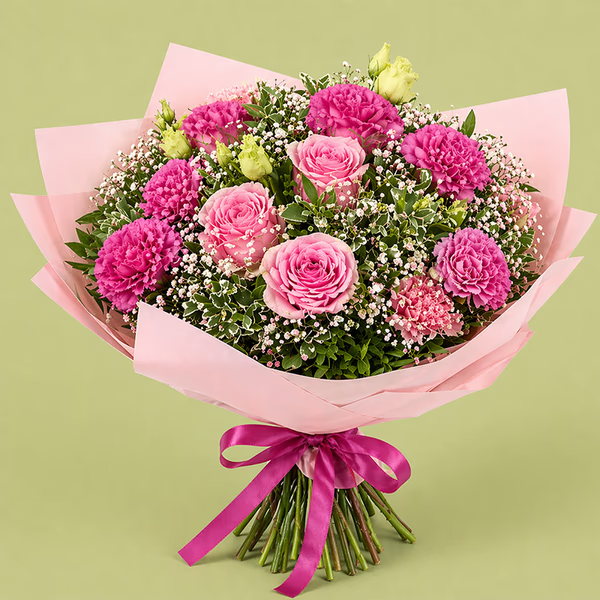
Fuchsia: A loud pink-purple that can also lean towards red. Also an eye-catching ombre format from light to dark pink.
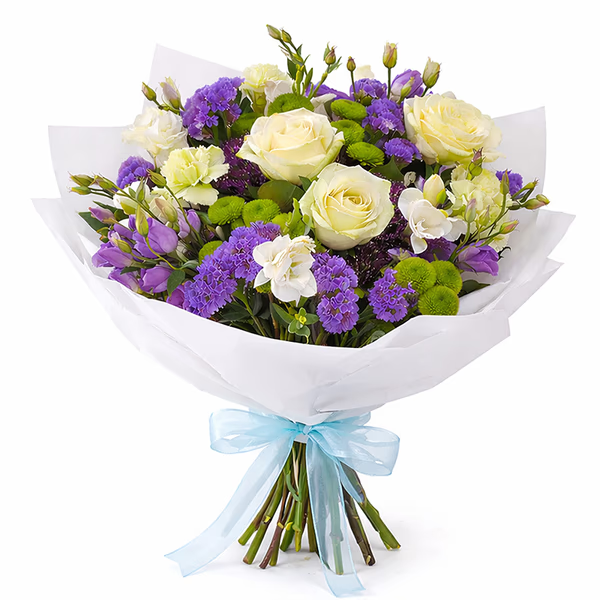
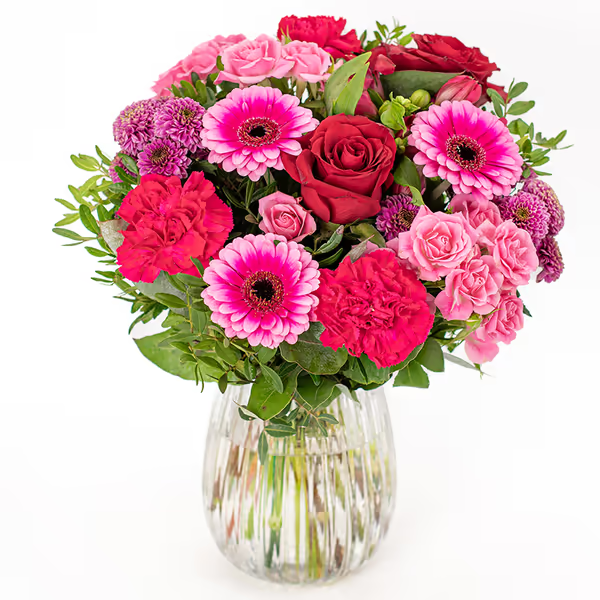
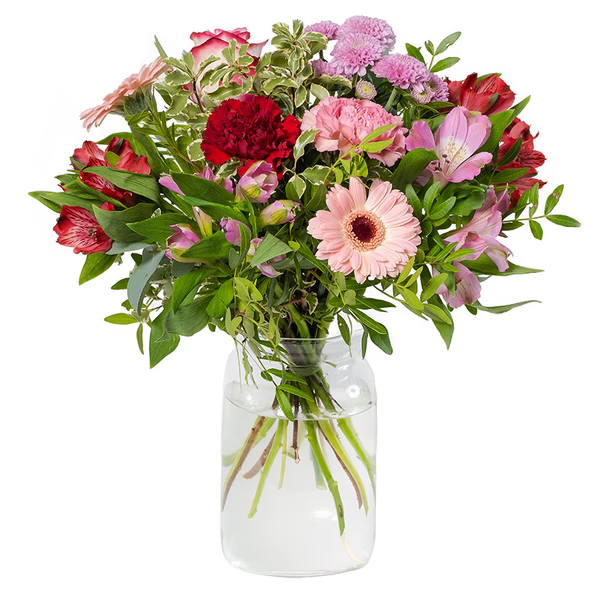
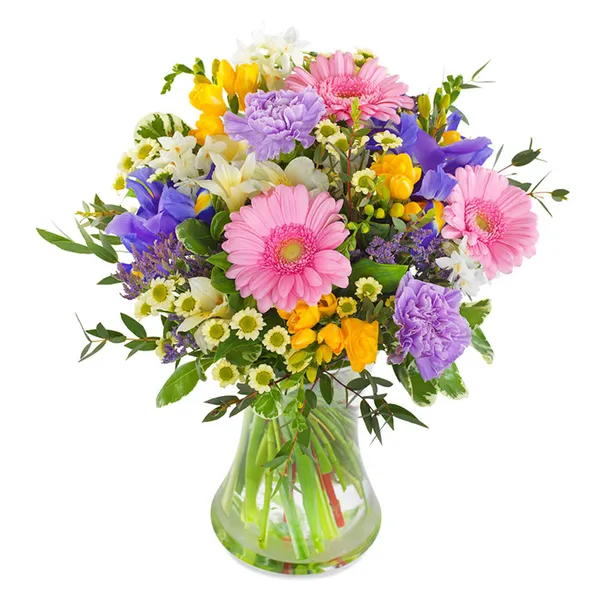
Herb and leaf greens
Sage: A greyish green found in so many kitchens it’ll frighten you. We're talking on the cupboard facings as a colour, and in them for seasoning.
Olive: Dark brown with a greenish tinge from the unripe fruit. Warm and earthy.
Fern: Mid-green and surprisingly bright compared to sage. The colour shares a woodland feel wherever it goes.
Eucalyptus: Silvery-green, not dissimilar to sage but with a cooler tone.
Moss: Mellow green from shady rocks and old trees. A more rustic colour than sage and lighter than olive.
Fruit and edible-plant colours
Peach: Soft orange-pink from the fruit’s skin. Makes us think of summer.
Plum: A deep reddish-purple that’s rich and moody for drama in any indoor space.
Apricot: Softer than peach, more of a pale orange with a very slight hint of pink.
Cherry: A bold red from the ripe fruit. Impossible to miss but sometimes mistaken for fire red (cherry is slightly darker).
Aubergine: Dark purple from the skin of the vegetable, and by far the moodiest of the bunch.
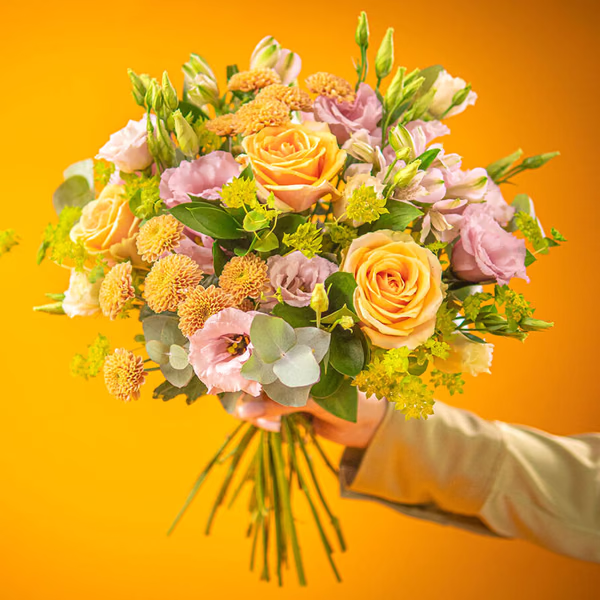
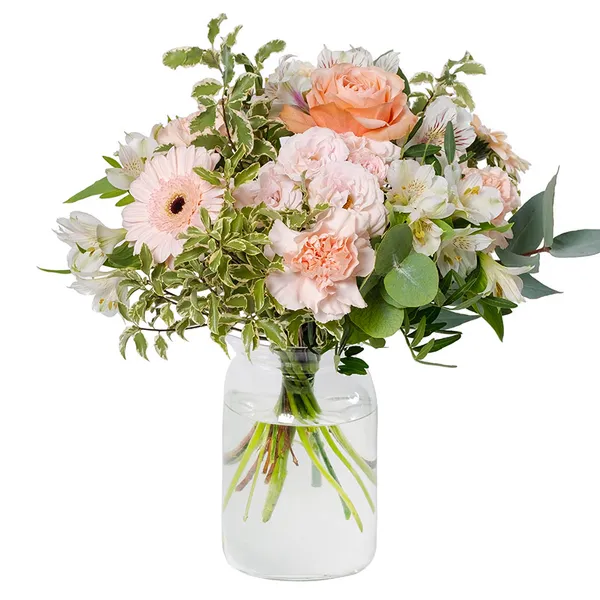
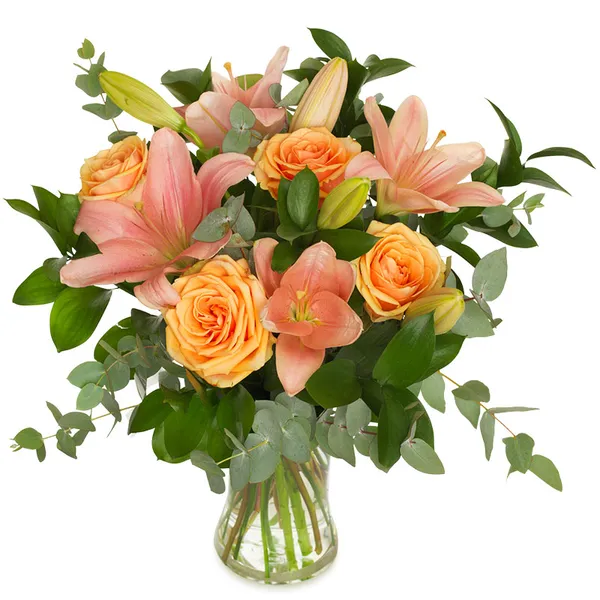

Colours that sound botanical, but aren’t
Magenta: Comes from the Battle of Magenta in 1859, the same year the dye came to be. However, it’s a similar colour to fuchsia.
Coral: Named after the marine animal, not a plant or fruit.
Teal: So-named after the duck, or the teal patch on the top of its head.
Choosing flowers by colour
Some of the colours we’ve highlighted will be favourites of yours, but not all of them are available as flowers.
- Peonies: These are larger-than-life with ruffled petals. Peonies are seasonal, with a short but glorious season in gardens from April to June, peaking in May. Pink, burgundy, and white are the colours you’ll have available.
- Roses: You’ll know these best for their neat, quilted heads and red varieties for romance. Yellow, white, and pink are other popular choices.
- Carnations: They come in whites, pinks, reds, and bi-colour varieties and are a hot pick for mixed bouquets.
- Freesia: A slender flower in white, yellow, pink, lilac, or red. Your pick for something bright and scented.
- Gerberas: Pastels and cooler shades, or warm colours. These daisy-like blooms have loads of variety and look cheerful.
- Lilies: A personal favourite in standalone and mixed spreads. It’s a large bloom best in white, pink, orange, and deep red.
Each of those flower varieties makes a good pairing. It’s typical to see them together with foliage such as ferns. That additional touch of green separates the flowers and ensures they stand out, and in colour-coordinated bunches for special occasions.
Conclusion
The flower, plant, and fruit came first. It was given a name, and then the colours we used from them became named as such. That simple sequence of events also spawned many of the modern names we use, like wasabi.
There’s so much more to flowers than their colours and where they came from. Read about the most common flower types in our flower encyclopedia.