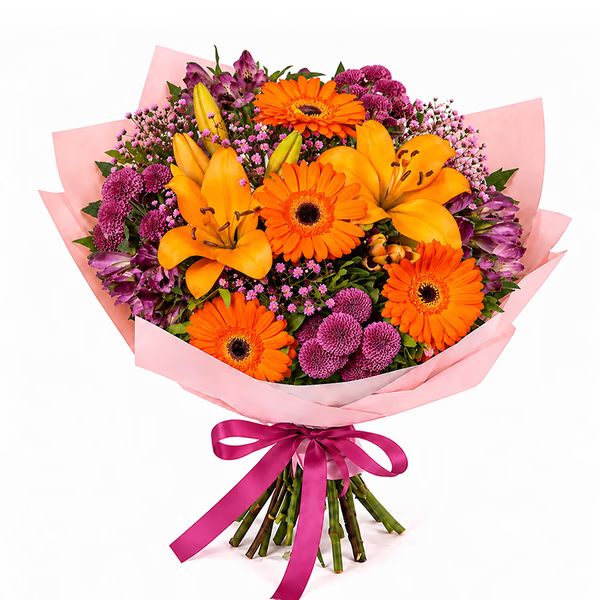
"Orange & Purple" Bouquet
Why is scent so closely linked to Christmas memories?
Cinnamon and gingerbread are Christmas scents no matter when you smell them. So is pine, and the smell of the old box of decorations in the attic.
Smell brings back Christmas memories more than any other sense. A song can remind you of Christmas, yet a smell can transport you back in time for a fleeting moment.
There's a reason for that, and it comes down to how your brain is wired.
How smell reaches your memory
Most of what you see, hear, and touch passes through a part of the brain called the thalamus, which sorts the information before sending it on.
Smell takes a shortcut. The signal from your nose goes to the olfactory bulb, which connects straight to the amygdala and the hippocampus. The amygdala handles emotion. The hippocampus handles memory.
A smell reaches the parts of your brain that deal with feelings and memories almost at once, before you've even worked out what you're smelling.
That's why a scent can bring back a feeling before it brings back the details. You feel something first, then you remember where it came from.

Why the memories feel so old
Researchers have found that memories triggered by smell tend to come from earlier in life than memories triggered by words or pictures. Many date back to before the age of ten.
They also tend to feel more emotional and more vivid. Scientists call this the Proust effect, after the French writer who described a bite of cake dipped in tea bringing his childhood flooding back.
Christmas is set up for it. The same smells turn up once a year, in the same rooms, with the same people, often for decades. Your brain files them together. Years later, one smell is enough to pull the whole file.

The smells of Christmas
Everyone's list is a bit different, but some scents come up time and again.
Pine and fir
The smell of a Christmas tree comes from compounds called terpenes, mostly pinene. It's the smell of the day the tree came into the house, needles on the carpet, and the lights going on for the first time.
Festive flowers
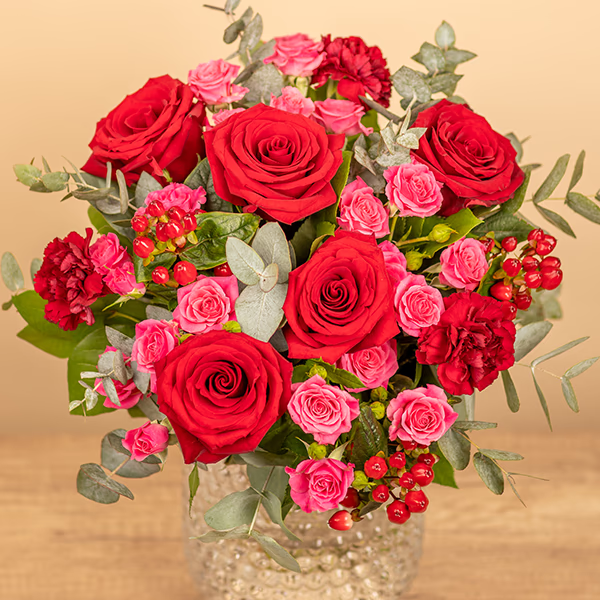
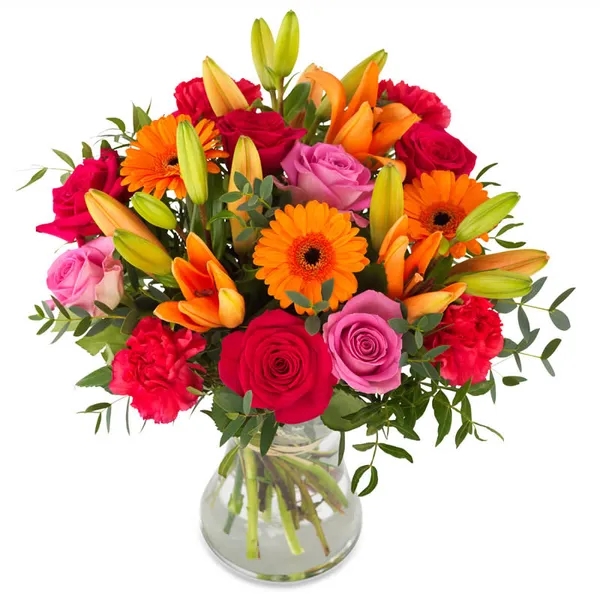
Christmas flowers that use pine and other foliage as fillers bring back that Christmas tree smell. Roses, carnations, and freesia also contribute to a Christmas display that smells as good as it looks.
Cinnamon
Cinnamon turns up in mince pies, mulled wine, biscuits, and candles. Its smell comes from a compound called cinnamaldehyde, and it's in so much festive food and drink that it's hard to separate it from Christmas.
Oranges
An orange in the toe of a stocking was a Christmas tradition for generations, from a time when fresh fruit in winter was a treat. The smell of orange peel, from a compound called limonene, still brings back Christmas morning for plenty of people.
Gingerbread
Ginger, cinnamon, nutmeg, and treacle baking in the oven. If you made gingerbread men as a child, the smell is going to take you straight back to the kitchen table.
The rest
Then there are the smells that belong to your house alone. Sprouts boiling on the hob. Your grandad's aftershave. Wrapping paper. Candle smoke. The turkey that's been in since six in the morning.
What's your favourite Christmas smell?
Take a minute and think about it. Which smell takes you back? Where are you when it does, and who's with you?
For a lot of people, the answer is tied to one person or one house. The smell of your grandma’s kitchen, or the spare room at an aunt's that smelled of potpourri.
Knowing what your smell is means you can bring it back on purpose. Bake the biscuits. Buy the tree. Stud an orange with cloves. Put the same flowers on the table your mum used to.
You're also making the smells of Christmas for the people around you right now, including any children in the house. The scents you fill the house with this year are the ones they'll remember in thirty years.
Bring the scent of Christmas to your Polish home
Christmas bouquets with eucalyptus, pine, and other seasonal foliage are an easy way to bring the smell of the season indoors. Order one for your own table or send one to someone whose Christmases you shared.