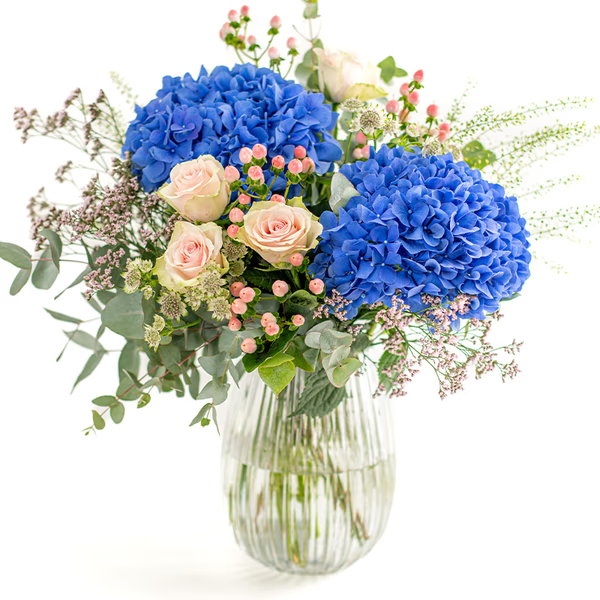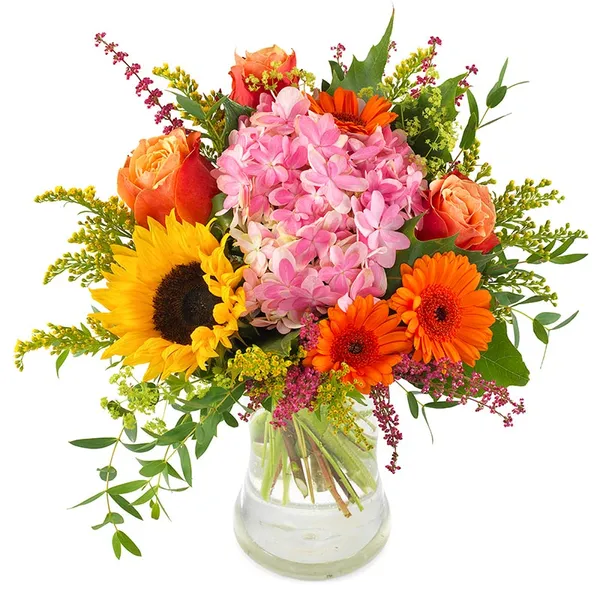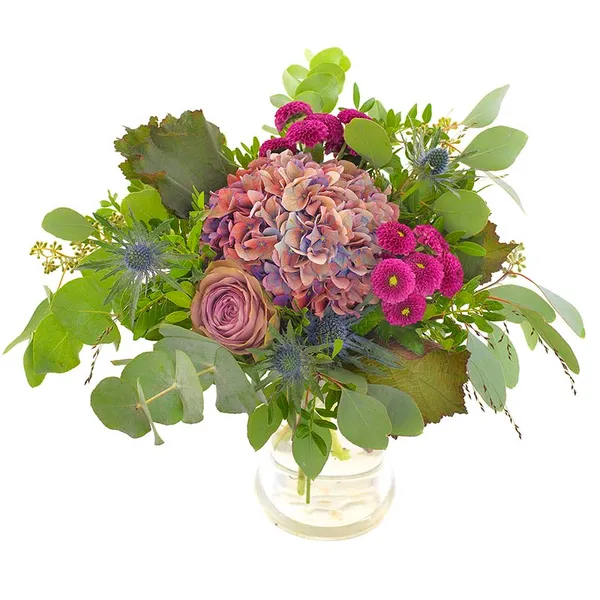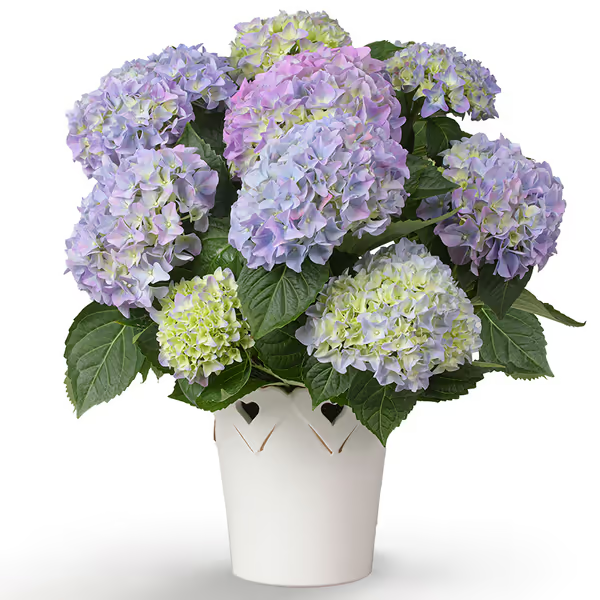
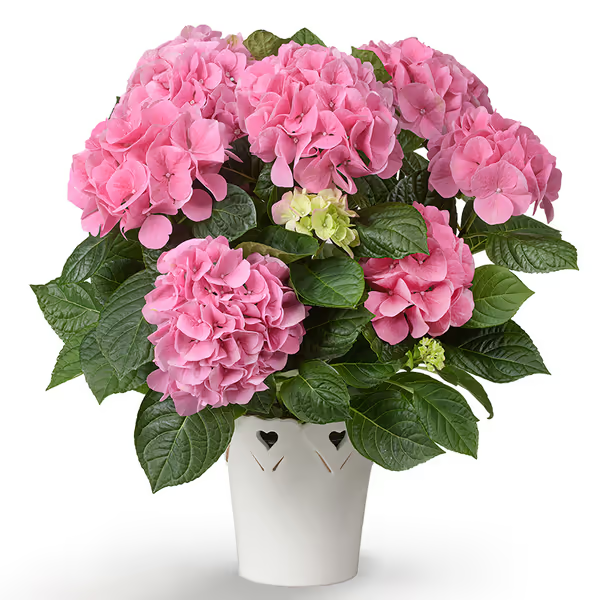
Hydrangeas are beloved for their full, rounded flower heads and soft, romantic colours. With their large, cloud-like clusters of blooms, they symbolise gratitude, grace, and heartfelt emotions. These stunning flowers are native to Asia and the Americas and are especially popular in gardens, weddings, and long-lasting floral arrangements. Hydrangeas are unique in that their flower colour can change depending on the soil’s pH level—more acidic soil produces blue flowers, while alkaline soil results in pink. Their versatility, beauty, and meaning make them a timeless favourite.
COMMON NAME
Hydrangea
BOTANICAL NAME
Hydrangea spp.
ORIGIN
Asia, Americas
PEOPLE ALSO CALL IT
Hortensia
FLOWERING TIME
Summer (June to September)
ASPECT
Partial shade to full sun
SYMBOLISM
Gratitude, grace, heartfelt emotions, abundance
Trim stems under water: Cut stems diagonally while submerged to prevent air bubbles.
Condition in warm water: Hydrangeas are thirsty flowers—immerse the heads in lukewarm water for 30 minutes if they appear wilted.
Change water daily: Keep the vase clean and filled with fresh water.
Use alum powder or boiling water dip: To extend vase life, dip the stem ends in alum or boiling water for a few seconds to seal the pores.
Avoid heat and direct sun: Place in a cool location out of direct sunlight.
Light requirements: Prefer morning sun and afternoon shade—too much heat can cause wilting.
Watering: Hydrangeas need consistent moisture. Water when the top layer of soil feels dry.
Soil and drainage: Use rich, well-draining soil. A mix with compost retains moisture without becoming soggy.
Fertilisation: Feed once a month with a fertiliser suitable for acid-loving plants.
Pruning: Prune in late winter or early spring depending on the variety (some bloom on old wood, others on new).
Hydrangeas carry a range of meanings depending on culture and colour. In general, they represent gratitude, deep understanding, and emotional expression. Pink hydrangeas symbolise love and sincere emotions, blue ones convey apology and forgiveness, while white hydrangeas represent purity and grace. In some cultures, they are associated with abundance due to their voluminous blooms. Despite their delicate appearance, they are also a sign of resilience, flourishing even in tough conditions.
There are several popular types of hydrangeas used in gardens and floristry:
- Bigleaf Hydrangea (Hydrangea macrophylla) – The most common, with either mophead (rounded) or lacecap (flat) flowers. Colour depends on soil pH.
- Panicle Hydrangea (Hydrangea paniculata) – Cone-shaped flowers that turn from white to pink and are very hardy.
- Smooth Hydrangea (Hydrangea arborescens) – Known for large, white blooms like ‘Annabelle’, great for shade gardens.
- Oakleaf Hydrangea (Hydrangea quercifolia) – Recognisable by its oak-like leaves and cone-shaped blooms, often turning red in autumn.
Take softwood cuttings in late spring or early summer. Choose non-flowering shoots around 10-15 cm long. Remove the lower leaves, dip the base in rooting hormone, and plant them in moist compost. Cover with a plastic bag or propagator and place in bright, indirect light. Roots form in 2-4 weeks.
Prune Hydrangea macrophylla lightly in early spring, only remove dead wood and last year's flowerheads. Paniculata and arborescens types can be cut back harder in late winter or early spring to shape and encourage stronger blooms.
Roots usually develop within 2-4 weeks. Once rooted, they can be repotted and will grow steadily. After 2-3 months, you’ll have a young plant that can be planted outdoors.
Wait until the flowers feel papery, usually late summer. Cut long stems, remove leaves, and hang the heads upside down in a dry, dark, well-ventilated space. Alternatively, place them in a vase without water and let them air dry naturally. For better colour retention, keep out of direct sunlight and consider using silica gel for preserving intense colours.
This could be due to sunburn, drought, wind damage, or frost. Over-fertilising or fungal diseases like leaf spot can also cause browning. Check soil moisture and light exposure.
Likely culprits are slugs, snails, vine weevils, or caterpillars. Check the leaves in the evening and look for holes or slime trails.
Yes, deadheading spent blooms helps keep the plant tidy and may encourage more flowers. For macrophylla types, wait until spring and cut just above healthy buds.
Most varieties bloom between June and September, with some lasting into October depending on type and weather.
Best planted in spring or autumn, when the soil is warm but not frozen. Avoid planting during heatwaves or frost.
In pots, they are more vulnerable. Protect them below -5 °C with fleece or bring them into a sheltered, frost-free place.
Transplant in spring or autumn, when the plant is dormant and the soil is mild.
Hydrangeas like moist, humus-rich, slightly acidic soil. For blue flowers, use ericaceous compost.
Most hydrangeas bloom for 6-12 weeks, some even longer.
1. Softwood cuttings (most common):
- Best done in late spring or early summer, when the new shoots are still green and flexible.
- Cut a 10–15 cm non-flowering shoot, remove lower leaves, and dip the cut end in rooting hormone.
- Plant the cutting in a small pot with moist potting compost, cover it with a clear plastic bag or place in a propagator.
- Keep it in a bright, warm spot (not direct sun) – roots should form in 2–4 weeks.
2. Layering (super easy method):
- Bend a low-growing branch to the ground (or into a nearby pot), nick the underside slightly, and cover it with soil.
- Hold it down with a stone or wire.
- After a few months, roots will form at the buried section – then you can cut and transplant it.
3. Division (for some varieties):
- In early spring or autumn, dig up the plant and carefully divide the rootball into two or more sections.
Panicle and oakleaf hydrangeas are best for sunny spots.
Most lose their leaves and look bare. Dried flowerheads often stay for winter interest.
Yes, hydrangeas are mildly toxic to humans. All parts of the plant – including leaves, stems, and especially the buds and flowers – contain compounds called glycosides, which can convert into cyanogenic compounds (similar to those in apple seeds). If eaten in large amounts, they can cause symptoms like:
Nausea
Vomiting
Diarrhoea
Abdominal pain
However, serious poisoning in humans is extremely rare, especially since the plant tastes unpleasant. Still, it’s a good idea to keep children from chewing on flowers or leaves, just in case.
Yes, hydrangeas are considered mildly toxic to dogs. The toxic substance is hydrangin, a cyanogenic glycoside found in all parts of the plant. If your dog eats a significant amount, it may experience symptoms such as:
Vomiting
Diarrhoea
Lethargy
Loss of appetite
In most cases, symptoms are mild and pass quickly, but you should contact your vet if your dog shows any signs of discomfort or if you know it ate part of the plant.
Depending on type: 60 cm to over 2 metres tall and wide.
Possibly pruned too hard, late frost damaged buds, or too much shade.
Użyj kwaśnej gleby (pH poniżej 6) i siarczanu glinu lub specjalnego preparatu do niebieszczenia hortensji. Zmiana koloru jest możliwa tylko w odmianach różowych lub niebieskich (H. macrophylla).
Hydrangeas are one of the most popular summer flowers in Poland and are widely available in florists from June to September. They are particularly sought after for weddings — hydrangeas are among the top three most popular wedding flowers in Poland, especially in rustic, boho, and garden-style arrangements. Dried hydrangeas are also very fashionable in Poland as home decorations and dried flower bouquets. Outside the summer season, fresh hydrangeas are less available in Polish florists, though some varieties can be found year-round. If you want to be notified about hydrangea availability, simply subscribe to our newsletter — we regularly announce the availability of seasonal flowers.
For Polish gardens, the most recommended variety is Hydrangea paniculata (panicle hydrangea) — it is the most frost-hardy of all hydrangeas and tolerates Polish winters without protection in most regions. Popular varieties include 'Limelight', 'Pinky Winky', and 'Vanille Fraise'. Hydrangea arborescens (smooth hydrangea), particularly the 'Annabelle' variety, is also very winter-hardy and produces spectacular large white flower balls. Hydrangea macrophylla (bigleaf hydrangea) — the classic blue and pink variety — is more frost-sensitive and may need winter protection in colder parts of Poland.
Yes, but they require extra care. Choose compact varieties — Hydrangea macrophylla dwarf varieties or Hydrangea paniculata 'Little Lime' are ideal for pots. Use a large container (at least 30–40 cm deep) with good drainage and humus-rich, slightly acidic soil. Water daily in summer — potted hydrangeas dry out much faster than garden plants. In winter, wrap the pot with fleece or move it to a sheltered, frost-free location, as potted hydrangeas are far more vulnerable to frost than those planted in the ground.