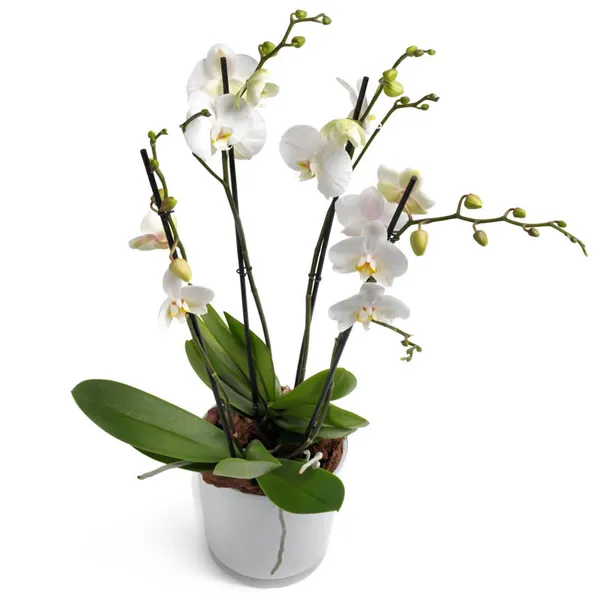
Orchids are one of the largest and most diverse families in the plant kingdom, with over 25,000 species and 100,000 hybrids. Renowned for their exotic beauty, architectural blooms, and long-lasting flowers, orchids are revered symbols of refinement, love, and rare beauty. Their asymmetrical flowers, intricate patterns, and sculptural forms make them a favourite for both interior design and emotional gifting.
COMMON NAME
Orchid
BOTANICAL NAME
Orchidaceae family (e.g. Phalaenopsis, Cattleya, Dendrobium, etc.)
ORIGIN
Global (notably Asia, South America, Central America)
PEOPLE ALSO CALL IT
Moth Orchid, Ice Orchid, Cymbidium, Butterfly Orchid
FLOWERING TIME
Varies by species (most bloom winter to spring)
ASPECT
Bright, indirect light, high humidity, good air circulation
SYMBOLISM
Love, luxury, elegance, beauty, mystery, fertility
Phalaenopsis (Moth Orchid) – Easiest to care for; popular as houseplants; blooms for months.
Cymbidium – Hardy, with many flowers per stem; ideal for cutting.
Dendrobium – Upright, delicate blooms; great for beginners.
Cattleya – Fragrant, bold flowers, traditionally used in corsages.
Vanda – Large, colourful, often suspended in air with exposed roots.
Oncidium (Dancing Lady Orchid) – Numerous tiny blooms; whimsical and long-lasting.
Light: Orchids need bright, indirect light—avoid harsh midday sun.
Watering: Water every 7–10 days, allowing the potting medium to dry out slightly between waterings. Never let the roots sit in water.
Humidity: Prefers 50–70% humidity. Use trays with water and pebbles or a humidifier indoors.
Air circulation: Orchids dislike stagnant air—gentle movement helps prevent rot and mould.
Potting mix: Use a special orchid bark mix, not regular soil. Repot every 1–2 years.
Fertilisation: Use a low-concentration orchid fertiliser ("weekly weakly") during active growth.
Pruning: After blooming, cut the flower spike just above the node for potential reblooming.
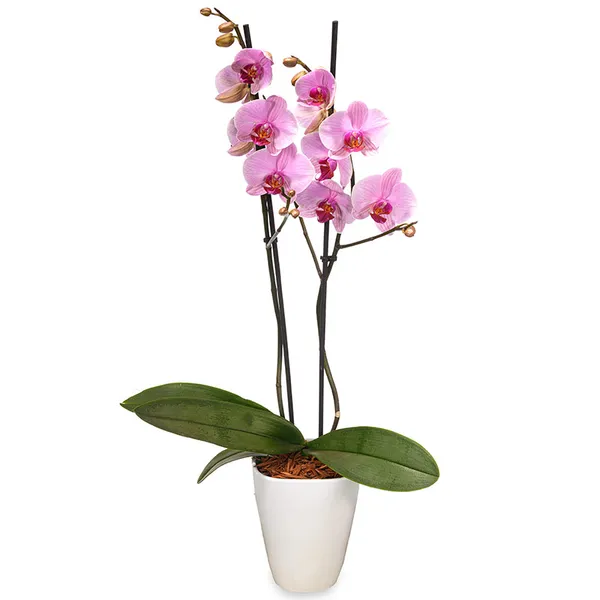
Orchids represent refined beauty, elegance, and deep emotional connections. In Victorian times, they symbolised luxury and sophistication, while in Chinese culture, they stand for fertility and harmony. Due to their uniqueness and diversity, orchids also convey rarity, mystery, and exotic charm—making them ideal for expressing admiration, love, and reverence.
Orchids prefer a bright spot without direct midday sun, high humidity, and well-ventilated roots. Use a transparent pot with orchid bark and mist occasionally. Feed with a special orchid fertiliser every 2–4 weeks during the growing season.
Repot orchids every 2–3 years, ideally after flowering in spring. Remove old bark, trim dead roots, and place the plant in fresh orchid substrate. Never use regular potting soil.
After blooming, cut the flower spike back to the second or third node (if green). If the spike has turned brown and dry, cut it off completely. Never cut healthy leaves or roots.
Water once a week in winter and up to twice a week in summer. Let the bark dry out slightly between waterings. The best method: soak the pot in water for 10–15 minutes, then let it drain well.
Orchids can bloom for 6–12 weeks, depending on the variety and conditions. With proper care, many types (like Phalaenopsis) can rebloom once or twice a year.
Most orchids bloom once or twice a year, often in winter or early spring, depending on the species. Phalaenopsis can bloom almost all year round with the right care.
Ćmówka is an old and rarely used Polish name for the orchid Phalaenopsis, the most popular potted orchid in Poland and worldwide. The name ćmówka is a direct translation of the botanical Latin name: Phalaenopsis derives from the Greek words phalaena — moth — and opsis — resembling, referring to the similarity of the flowers to tropical moths.
Yes — and to such a degree that they are one of the most accessible plants on the Polish market. Phalaenopsis, the most popular potted orchid, is available year-round virtually everywhere: in florists, supermarkets, DIY stores, garden centres, and online shops. P
More exotic varieties — Vanda, Cymbidium, Cattleya, Dendrobium — are available primarily in specialist florists and online shops, at significantly higher prices. Cut orchids (Cymbidium, Dendrobium) are available in larger florists year-round, though their availability is lower than that of potted plants.
A truly blue orchid virtually does not exist in nature. Orchids sold as "blue" are in fact white Phalaenopsis with blue dye artificially injected into the stem. The effect is beautiful but temporary: at the next blooming cycle, the plant returns to its natural white colour. If you are looking for a cool, violet toneas choose naturally lavender or purple Phalaenopsis varieties, which are available in Polish florists year-round.
You can send an orchid as a gift through Euroflorist flower delivery service. Euroflorist will deliver a fresh orchid directly to their door. You can choose your preferred delivery date and place your order quickly and conveniently online. It is the perfect solution when you cannot be there in person — a potted orchid is a gift that delights instantly and stays with the recipient for many months to come.