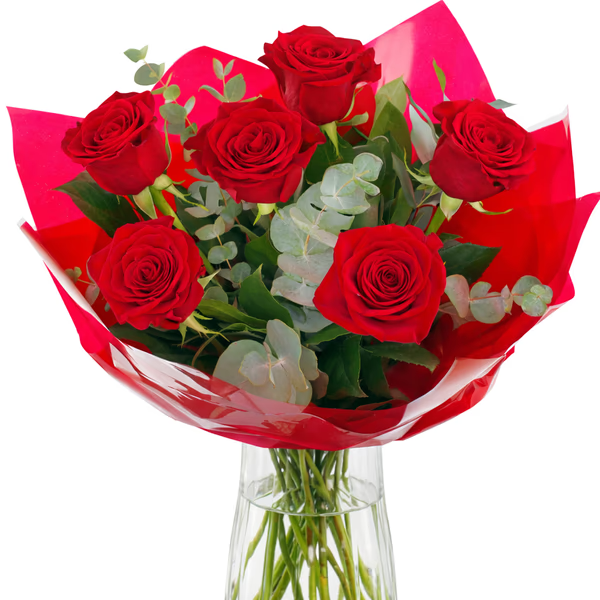
Roses: The Timeless Symbol of Love and Beauty

Roses are perhaps the most iconic and universally recognized flowers, celebrated for their beauty, elegance, and rich fragrance. They symbolize love, passion, and romance, making them a timeless choice for bouquets, celebrations, and special occasions. With over 150 species and thousands of hybrids, roses come in a stunning variety of colors, each with its own unique meaning. From classic red roses that express deep love to delicate white roses symbolizing purity, roses hold a unique place in gardens and floral arrangements worldwide.


rose
Fact icon

COMMON NAME

Rose

Fact icon

BOTANICAL NAME

Rosa spp.

Fact icon

ORIGIN

Asia, Europe, North America, and Africa

Fact icon

PEOPLE ALSO CALL IT

Queen of Flowers

Fact icon

FLOWERING TIME

Late spring through fall (May to October)

Fact icon

ASPECT

Full sun

Fact icon

SYMBOLISM

Love, passion, beauty, purity, and friendship

Care Tips for Cut Roses in a Vase

Trim Stems at an Angle: Re-cut the stems at a diagonal under water to prevent air bubbles and improve water absorption.

Remove Lower Leaves: Strip any leaves that would sit below the waterline to avoid bacterial growth.

Change Water Regularly: Replace the water every two days and add flower food to nourish the roses.

Keep Cool: Place the vase in a cool spot away from direct sunlight, heat sources, or drafts.

Prune Fading Blooms: Remove any wilting flowers or petals to encourage the remaining blooms to last longer.

Symbolism and Meaning

Roses are rich in symbolism, with the meaning varying depending on the colour. Read our guide to the symbolism of roses to find out what the different colours mean.


Types of Roses

Roses come in a wide variety of types, each with unique qualities and uses, from formal gardens to floral arrangements. Here's a closer look at the most popular classes of roses:

Hybrid Tea Roses are renowned for their large, elegant, and high-centered blooms, often displayed as a single flower on long stems. These roses are a staple in floral arrangements, highly popular in gardens, and can also be preserved as keepsakes, making them a timeless choice for cut flowers.

Floribundas are known for their clusters of smaller flowers, which bloom prolifically throughout the season. Compared to hybrid teas, they are generally more compact and offer a longer blooming period, making them ideal for garden borders and mass planting.

Grandifloras are a cross between hybrid teas and floribundas, combining the best of both groups. They produce large, showy flowers in clusters, offering the elegance of hybrid teas with the abundant blooms of floribundas. Their tall, sturdy stems make them perfect for adding height and drama to gardens.

Climbing Roses are known for their long, trailing canes that can be trained to grow on trellises, arbors, fences, or walls. Their ability to climb and spread makes them a stunning choice for vertical spaces, adding a romantic and whimsical touch to any garden.

Miniature Roses are small in size but offer all the beauty and charm of larger rose varieties. Their compact growth makes them perfect for pots, containers, and small garden spaces, while their delicate blooms add a splash of color to borders and edges.

Shrub Roses encompass a diverse group of roses that are hardy, versatile, and easy to care for. They come in various shapes and sizes, from low-growing varieties to sprawling bushes, making them an excellent choice for landscaping and informal gardens.

Old Garden Roses, also known as heritage or antique roses, are varieties that predate modern hybrid roses (introduced after 1867). These roses are cherished for their strong fragrance, classic shapes, and timeless beauty. They often have a natural, romantic charm that evokes the elegance of bygone eras.
Frequently Asked Questions About Roses

Prune your roses in late winter to early spring (February to March) when the plant is still dormant but showing signs of new growth. In areas with mild winters, pruning can be done earlier.

For repeat-flowering roses, light pruning can also be done in summer after the first bloom to encourage a second flowering.

This is how you prune roses: 

  • Clean your tools: Use sharp, clean pruning shears to prevent disease.
  • Remove deadwood: Cut out all dead, damaged, or diseased wood.
  • Shape the plant: Cut stems back to about 1 cm above an outward-facing bud to encourage open growth.
  • Thin the center: Remove weak and crossing branches to improve airflow and reduce disease risk.
  • Pruning by type:
    • Hybrid tea roses: Prune back to about 30-45 cm.
    • Shrub roses: Remove up to one-third of the oldest stems.
    • Climbing roses: Cut back side shoots to 2-3 buds and remove damaged canes.

This is how you fertilise your roses:

  • Start fertilizing in early spring when new growth appears. Use a balanced rose fertilizer (10-10-10 or 5-10-5).
  • Apply fertilizer again after the first bloom to support repeat flowering.
  • Avoid late-season fertilizing: Stop fertilizing 6-8 weeks before the first frost to prevent tender growth that could be damaged by cold.

No, roses (Rosa species) are not toxic to cats. However, the thorns can cause injury, and ingestion of leaves or petals may cause mild stomach upset.

  • Cut roses: With proper care, cut roses last 5-10 days in a vase.
  • Garden roses: Depending on the variety and weather, rose blooms can last anywhere from 1-3 weeks on the plant. Repeat-flowering roses produce blooms multiple times through the season.
  • Plant bare-root roses in late autumn to early spring.
  • Container roses can be planted any time, but spring and autumn are best for root establishment.

This is how you tackle greenflies on your roses?

  • Spray roses with a strong stream of water to dislodge greenflies.
  • Use natural predators like ladybirds.
  • Apply an insecticidal soap or neem oil solution to control infestations.

Black spots on your roses are most likely casued by a fungal disease called Diplocarpon rosae.


This is how you should treat it: 

  • Remove and dispose of infected leaves.
  • Improve airflow and avoid wetting foliage.
  • Use a fungicide like sulfur or copper spray regularly.

Roses can be propagated through:

  • Cuttings: Growing new plants from stem cuttings.
  • Layering: Bending stems to root while still attached to the parent plant.
  • Grafting: Combining rootstock with a rose cutting.
  • Take a 15-20 cm cutting from a healthy, non-flowering stem.
  • Remove the lower leaves, keeping 2-3 at the top.
  • Dip the cut end in rooting hormone.
  • Plant the cutting in moist soil or sand.
  • Cover with a plastic bag or dome to retain humidity.
  • Place in indirect light and keep the soil moist until roots develop.

Use sharp pruners to cut a 15-20 cm section of a healthy stem just below a leaf node. Remove lower leaves and buds. Follow the same steps as in propagation to encourage root growth.

Causes:

  • Lack of water or heat stress.
  • Air bubbles in the stems (cut roses).
  • Disease or pests.


Solutions:

  • Recut the stems under water at an angle and place them in fresh, cool water.
  • For potted or garden roses, water deeply and check for pests or diseases.

Roses bloom from late spring to early autumn. Repeat-flowering varieties bloom multiple times throughout the season, while old garden roses bloom once in early summer.

Yes, but it’s not ideal. Uprooting roses during flowering stresses the plant. If necessary, transplant them carefully with as much root ball as possible and water thoroughly.

Water your roses deeply 1-2 times per week, depending on the weather and soil. Avoid superficial watering, as this can weaken the roots.

Strongly scented varieties include:

  • Damask roses
  • English roses (e.g. David Austin varieties such as ‘Gertrude Jekyll’)
  • Old garden roses such as Bourbon roses, centifolia roses and moss roses.

No, roses are not toxic to dogs. However, the thorns may cause cuts, and eating large amounts may lead to digestive irritation.

The rose is absolutely exceptional in terms of stylistic versatility — uniquely, it can naturally fit into almost any floristry style, from the most classical to the avant-garde. This is one of the reasons it has remained the Queen of Flowers for centuries.

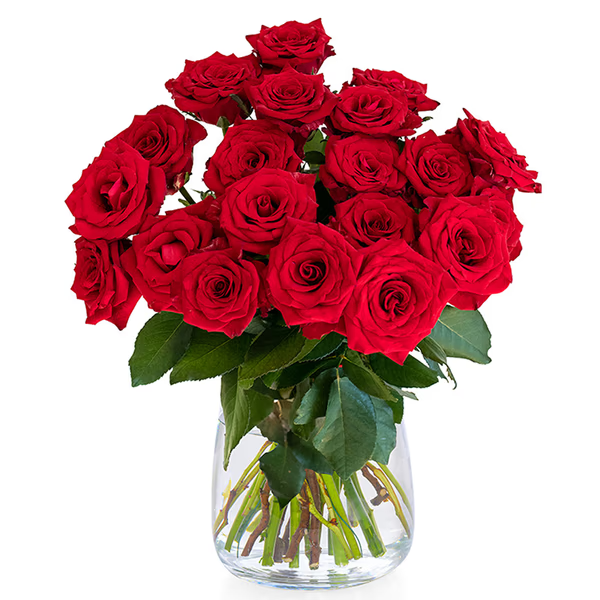
Classic and elegant — this is its natural kingdom. A bouquet of long-stemmed red or white hybrid tea roses is an absolute classic that will never go out of fashion. A simple, elegant form, one dominant colour, minimal greenery — a composition that says everything without a single word.

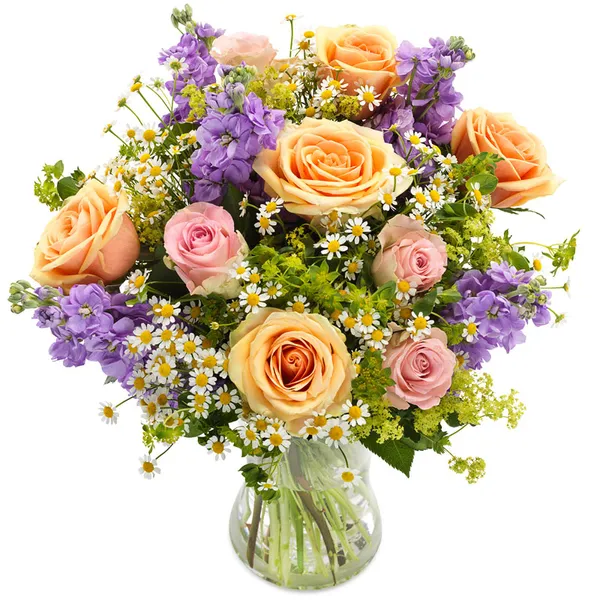
Romantic and garden style — David Austin varieties with their full, densely petalled blooms and intense fragrance create bouquets of exceptional depth and nostalgic charm. Combined with peonies, lisianthus, and eucalyptus, they produce the effect of a bouquet straight from an English garden.

Boho and rustic — spray roses and small garden roses fit beautifully into loose, airy boho-style compositions. Alongside ornamental grasses, dried elements, and cornflowers, they create bouquets with a natural, undone character.

Minimalist and modern — a monobouquet of one rose variety in a single colour is one of the most striking and fashionable solutions in contemporary floristry. Particularly effective in unusual colours — deep red, espresso, lavender, or delicate salmon.

Luxury and prestige — Ecuadorian roses with 60–80 cm stems and enormous buds are the material for premium bouquets for the most important occasions. One hundred red roses in an enormous bouquet is a gesture that requires no commentary.

Wedding — roses are the most frequently chosen flower for wedding bouquets in Poland regardless of wedding style. White and cream varieties dominate classic weddings, pastel pink in garden and boho styles, and deep red and burgundy in elegant autumn floristry.

Yes — you will find them in every florist, all year round, unless they just sold out. They are the only flower with such complete, year-round availability across the entire Polish market — from small neighbourhood florists to large online shops.

The availability of specific varieties and colours may vary depending on the size of the florist — smaller shops typically stock a few basic colours (red, pink, white), while larger florists and online shops offer dozens of varieties.

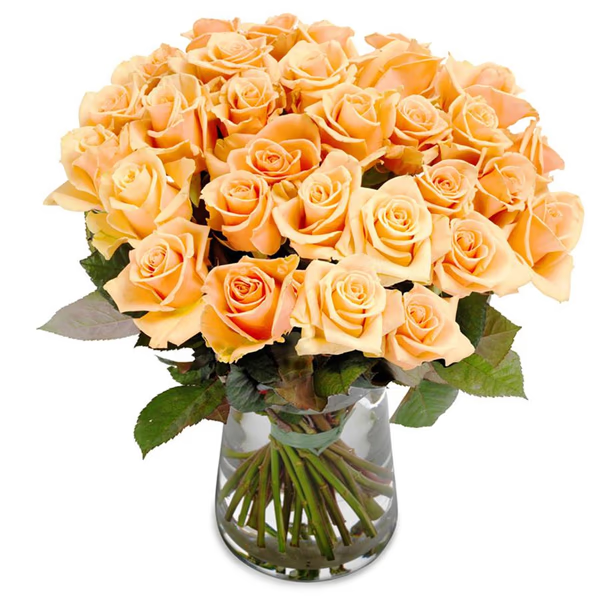
A monobouquet is a composition built exclusively from one type of flower — in this case, roses alone.

The power of a rose monobouquet lies in its simplicity and strength of statement. Rather than combining many different flowers, the florist focuses all attention on a single species — allowing the beauty, colour, and texture of the rose itself to be fully appreciated without visual distraction. The effect is simultaneously minimalist and very luxurious.

Rose monobouquets can take different forms:

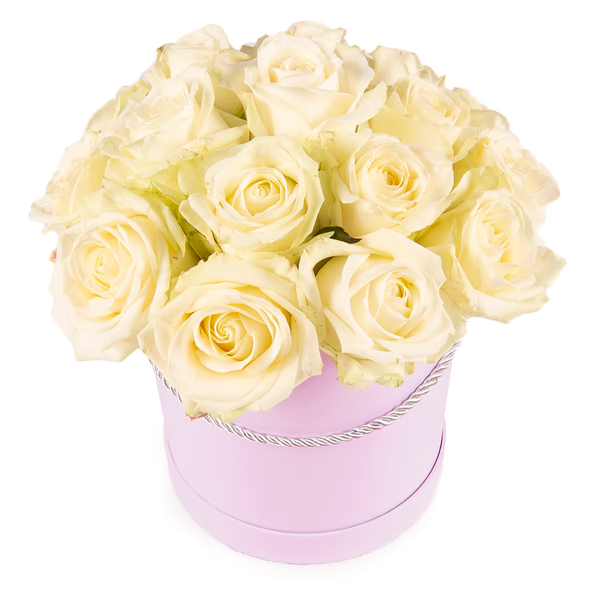
Monochromatic — all roses in a single colour. The classic monobouquet of one hundred red roses is one of the most recognisable romantic gestures in Poland. Similarly impactful are bouquets of all-white or all-pink roses — clean, elegant, and very striking.

Colour gradient — roses in several shades of the same colour.

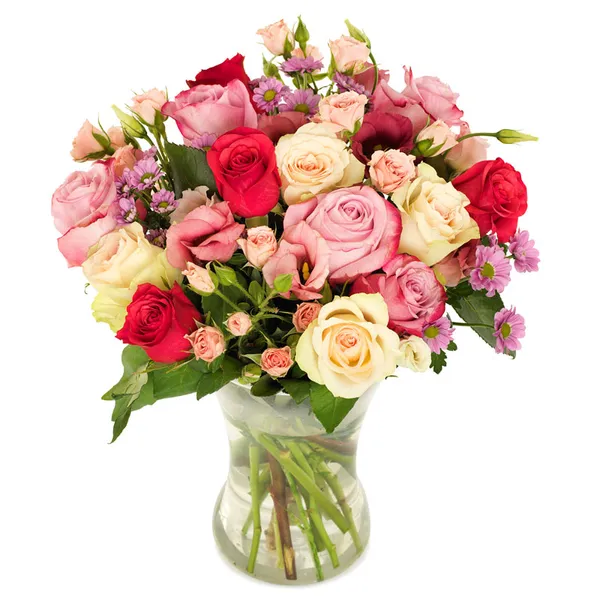
Variety mix — combining different rose varieties (e.g. David Austin with classic hybrid teas and spray roses) in a similar colour palette produces a bouquet of exceptional textural and visual depth.

A rose monobouquet works beautifully as a gift for Valentine's Day, Women's Day, and birthdays, as well as a wedding bouquet — particularly in modern and minimalist styles.

Author

David Denyer

Euroflorist's Flower Expert

With over 35 years of floristry experience, David Denyer is a renowned master in his field. His talent and artistic vision have earned him numerous accolades and awards, establishing him as one of the industry's leading figures. David has captivated audiences worldwide, showcasing his passion for floristry in Europe, China, Australia, and America. His captivating demonstrations have left a lasting impression on floral enthusiasts globally. In 2023, David made a memorable appearance on the prestigious television show, Gardeners World, further solidifying his reputation as an exceptional florist. David's journey to success began in 1996 when he was named Interflora "Florist of the Year." Since then, he has represented the United Kingdom in the "Europa Cup" and achieved consecutive Chelsea Gold Medals and Best in Show titles at the renowned Chelsea Flower Show from 2000 to 2003. In July 2004, David was once again named Interflora "Florist of the Year" and led his team to victory at the Interflora World Cup in Melbourne, Australia. He continued to impress with another Chelsea Gold Medal in 2005 and received a Gold Medal in 2011 for his floral installation titled "A Sense of Perspective." David's Accolades: July 1996: Interflora "Florist of the Year"; September 1999: Represented the UK in the "Europa Cup" in Austria; May 2000-2005: 6x Consecutive Chelsea Gold Medal and Best in Show - Professional Floristry; July 2004: Interflora "Florist of the Year"; September 2004: Interflora World Cup Winners in Melbourne, Australia; 2011: Chelsea Gold Medal for "A Sense of Perspective" floral installation; 2023: Appeared on Gardeners World in 2023; David's vast experience and expertise now benefits Eflorist customers. Understanding the emotional power of flowers, he ensures that every customer receives the utmost delight when enjoying their thoughtfully sent bouquet.