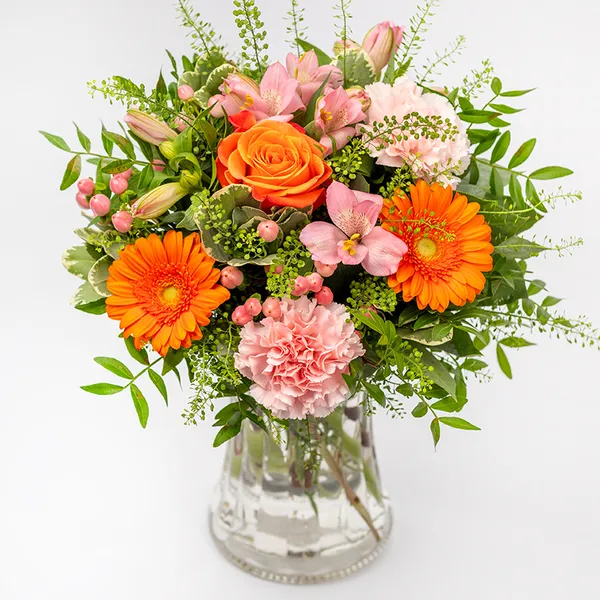
Coral charm
Hypericum: The Glossy Berries That Bring Every Bouquet to Life
Hypericum, known in floristry primarily by its botanical name, is a plant you will recognise in Polish flower shops not by its flowers but by its striking, glossy berries. It is precisely these — in shades of intense red, deep green, salmon pink, and near-black burgundy — that have made hypericum one of the most sought-after structural elements in contemporary floristry. Hypericum berries add depth, texture, and natural character to bouquets.


COMMON NAME
St John's Wort

BOTANICAL NAME
Hypericum perforatum (wild type), Hypericum androsaemum, etc.

ORIGIN
Europe, Western Asia

PEOPLE ALSO CALL IT
Hypericum, Goatweed, Chase-devil, Tipton's Weed

FLOWERING TIME
June to August

ASPECT
Full sun to partial shade, well-drained soil

SYMBOLISM
Protection, healing, resilience, light, courage
Hypericum - Mysterious Red Berries
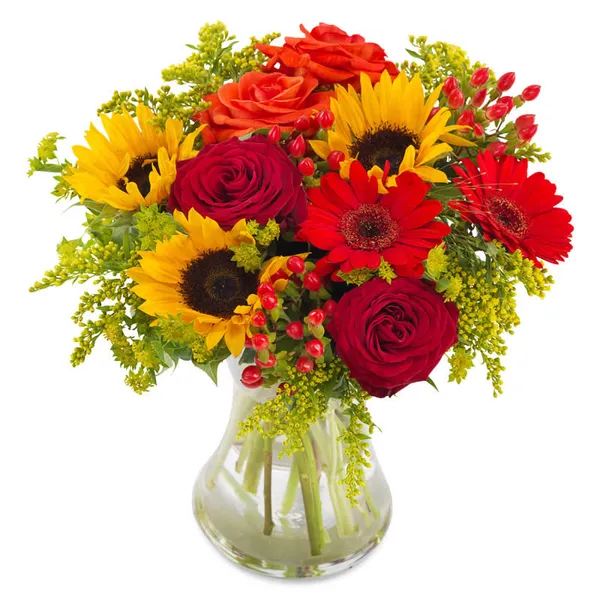
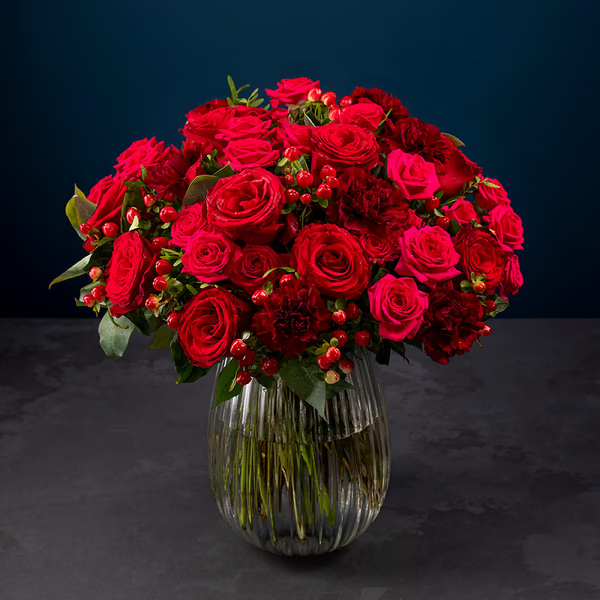
Hypericum berries are one of those floristry ingredients in Poland that customers recognise by sight but cannot name. Florists are very frequently asked to add „those red balls", „those shiny little red berries", or „those small red fruits that appear in autumn bouquets" to an arrangement — and they almost always mean hypericum. This perfectly illustrates how deeply these unassuming berries have embedded themselves in the Polish floristry imagination, even though their name remains unknown to most customers. So if you have ever ordered a bouquet with „those red berries" — now you know: it was hypericum all along.
Symbolism & Meaning
St John’s Wort symbolises light overcoming darkness. Traditionally used to ward off evil spirits and sadness, it has long been linked to mental well-being, protection, and courage. The bright yellow flowers are often seen as a beacon of hope, and the plant itself, harvested during midsummer, marks a turning point toward healing and inner strength.
Types of St John's Wort
Hypericum perforatum – The wild type, most commonly used in herbal remedies.
Hypericum androsaemum – Known for its striking berries in red, green, or black; popular in floristry.
Hypericum calycinum – Low-growing with large golden flowers; often used as groundcover.
Hypericum hidcoteense ‘Hidcote’ – Compact, floriferous variety with long bloom time.
Hypericum inodorum – Berry-producing, used ornamentally in modern floral arrangements.