Thistle: The Bold Beauty

The thistle is a hardy and unique flower known for its spiky appearance and strong character. Often associated with resilience and pride, it is famously the national symbol of Scotland. Despite its prickly exterior, the thistle produces delicate, globe-like flowers in shades of purple, blue, or silvery green. It symbolises protection, strength, and independence, making it a powerful statement flower in rustic or wildflower arrangements. Thistles are also popular in dried bouquets due to their excellent longevity and striking texture.


blue thistle on a grey background
Fact icon

COMMON NAME

Thistle

Fact icon

BOTANICAL NAME

Eryngium, Onopordum, Cirsium, Carduus spp.

Fact icon

ORIGIN

Europe, North Africa, Western and Central Asia

Fact icon

ASPECT

Full sun, dry or well-drained soil

Fact icon

SYMBOLISM

Strength, resilience, pride, protection, nobility

Types of Thistles

There are many varieties, each with its own personality:

- Eryngium (Sea Holly) – A popular florist favourite with metallic blue tones and spiny bracts.

- Onopordum acanthium (Scotch Thistle) – The iconic, tall, woolly species symbolic of Scotland.

- Cirsium – Wild thistles commonly found in meadows and natural landscapes.

- Carduus – Another genus of traditional thistles, often used ornamentally or for their symbolic value.

Care Tips for Cut Thistles in a Vase

Trim stems at an angle: Use a sharp knife or scissors to cut stems diagonally for better water intake.

Minimal leaf removal needed: Thistles have few leaves, but remove any that fall below the waterline.

Use clean, cool water: Change water every 2–3 days and keep the vase clean.

Long-lasting in the vase: Thistles can last 7–14 days and retain their shape well.

Great for drying: Air-dry thistles upside down in a dark, dry place – they keep their colour and structure beautifully.

Symbolism & Meaning

The thistle stands for resilience, courage, and dignity, flourishing even in harsh conditions. Its spiky form represents protection, while the beautiful bloom at its centre symbolises inner beauty and strength. In Scottish culture, it’s a symbol of national pride and defence—legend has it that a Norse invader stepped on one and alerted the Scots! Today, thistles are often used to honour strength in adversity or to symbolise fierce individuality and independence.

Frequently Asked Questions About Thistles

Thistles — and particularly sea holly (Eryngium) — are increasingly popular in Polish florists, especially for rustic, boho, and wildflower-style arrangements. They are available mainly from June to September, with peak availability in summer.  They are rarely used as a standalone bouquet flower but are highly valued as a structural accent in mixed arrangements. 

However, they are not as widely stocked as more mainstream flowers such as roses, gerberas, or chrysanthemums — so if you want to order thistles or sea holly for a specific occasion, it is strongly recommended to order in advance to ensure availability.

Sea holly/thistles bring order, texture and personality to bouquets. It is like a vertical accent in the score of a composition. Here are the styles and combinations where it works best:

Boho and rustic — it appears increasingly in wedding bouquets in the boho and rustic style, where alongside eucalyptus, grasses, dried elements, and roses it provides a counterpoint, adding structure, depth, and character to the bouquet.

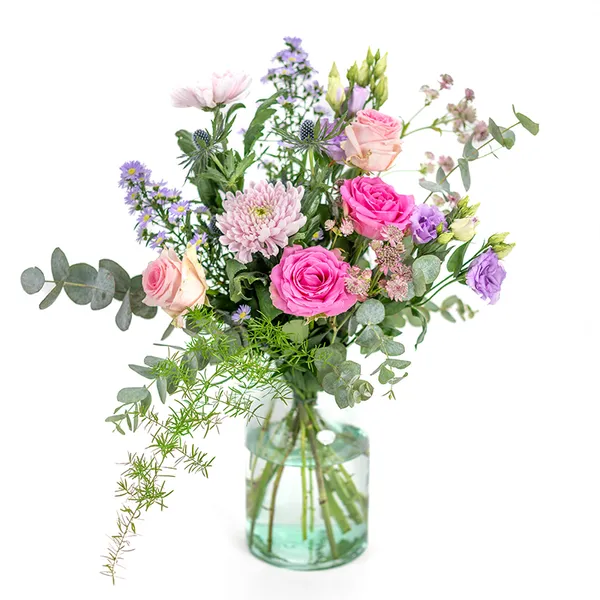
Natural / wildflower — it works beautifully in natural bouquets. Combined with white freesias, wildflowers, delphinium, fine-leaf eucalyptus, and asparagus fern, it creates a light yet elegant bridal bouquet.

Minimalist and modern — its steel-blue flower heads create a striking accent that contrasts beautifully with more delicate plants such as ornamental grasses, lavender, and rudbeckia.

Winter and Christmas — its metallic, steel-blue and silver tone pairs perfectly with white, cream, and gold — the classic winter decoration palette. In white bouquets and winter compositions, sea holly adds shimmer, structure, and a wintry character without the need for artificial elements. At Euroflorist, sea holly is regularly used in winter bouquets precisely for this quality — its silvery tones bring white and cream compositions to life, adding depth and a natural, frosty charm. It pairs beautifully with white roses, lisianthus, gypsophila, and branches of eucalyptus and fir.

Bouquets for men — sea holly is one of the few flowers that naturally fits the aesthetic of a masculine bouquet. Its spiky, raw form, strong character, and understated metallic colouring mean it never looks overly floral. It works best combined with dark, deep colours — burgundy tulips or roses, deep blue irises, graphite ornamental grasses, and eucalyptus foliage.

Dried arrangements — its greatest advantage is durability — once cut it stays fresh for a long time, and when dried it barely changes, making it a popular choice for compositions meant to last: wreaths, seasonal decorations, and keepsake bouquets.

What to avoid: because its individual flowers are relatively small, it can get lost among large-flowered plants — it is best combined with other small flowers or used as a standalone structural accent.

Author

David Denyer

Euroflorist's Flower Expert

With over 35 years of floristry experience, David Denyer is a renowned master in his field. His talent and artistic vision have earned him numerous accolades and awards, establishing him as one of the industry's leading figures. David has captivated audiences worldwide, showcasing his passion for floristry in Europe, China, Australia, and America. His captivating demonstrations have left a lasting impression on floral enthusiasts globally. In 2023, David made a memorable appearance on the prestigious television show, Gardeners World, further solidifying his reputation as an exceptional florist. David's journey to success began in 1996 when he was named Interflora "Florist of the Year." Since then, he has represented the United Kingdom in the "Europa Cup" and achieved consecutive Chelsea Gold Medals and Best in Show titles at the renowned Chelsea Flower Show from 2000 to 2003. In July 2004, David was once again named Interflora "Florist of the Year" and led his team to victory at the Interflora World Cup in Melbourne, Australia. He continued to impress with another Chelsea Gold Medal in 2005 and received a Gold Medal in 2011 for his floral installation titled "A Sense of Perspective." David's Accolades: July 1996: Interflora "Florist of the Year"; September 1999: Represented the UK in the "Europa Cup" in Austria; May 2000-2005: 6x Consecutive Chelsea Gold Medal and Best in Show - Professional Floristry; July 2004: Interflora "Florist of the Year"; September 2004: Interflora World Cup Winners in Melbourne, Australia; 2011: Chelsea Gold Medal for "A Sense of Perspective" floral installation; 2023: Appeared on Gardeners World in 2023; David's vast experience and expertise now benefits Eflorist customers. Understanding the emotional power of flowers, he ensures that every customer receives the utmost delight when enjoying their thoughtfully sent bouquet.