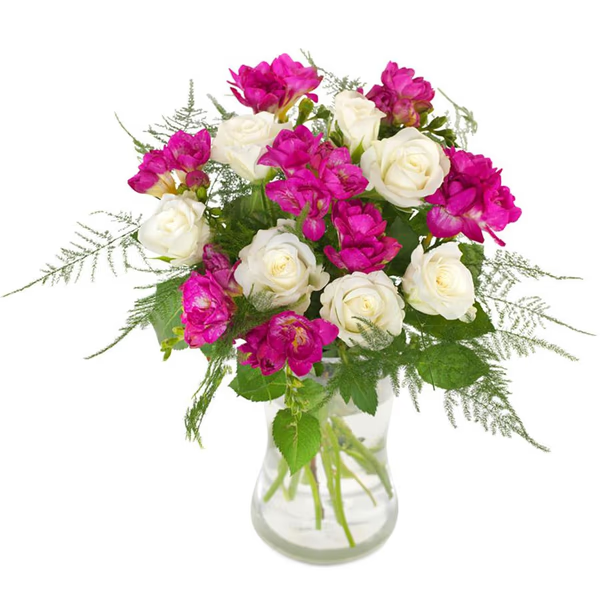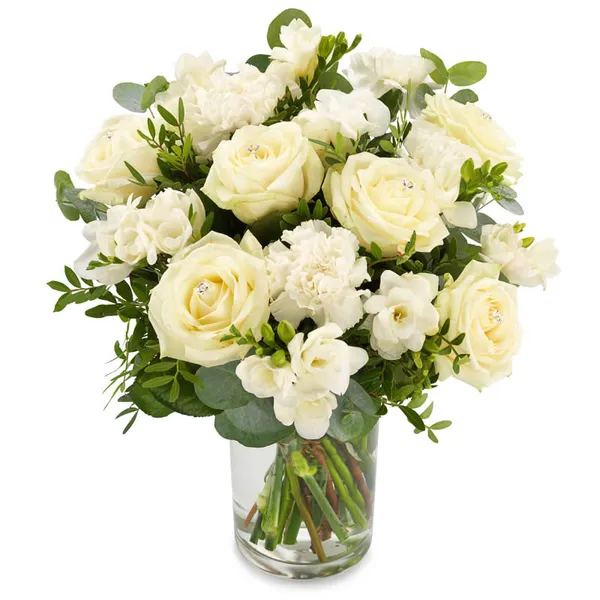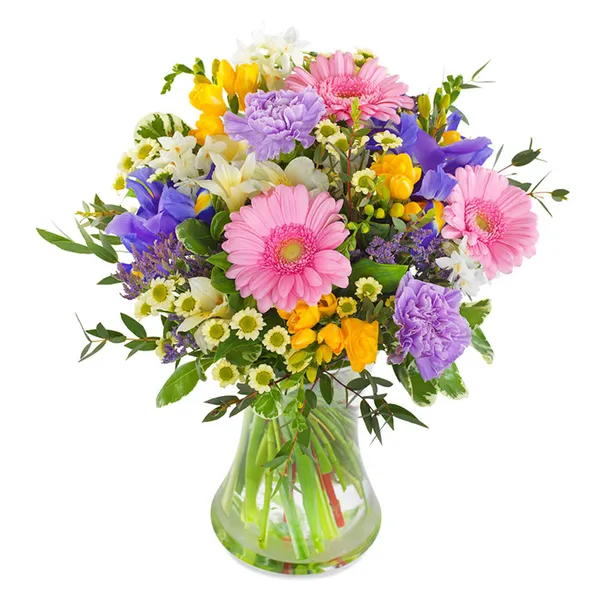
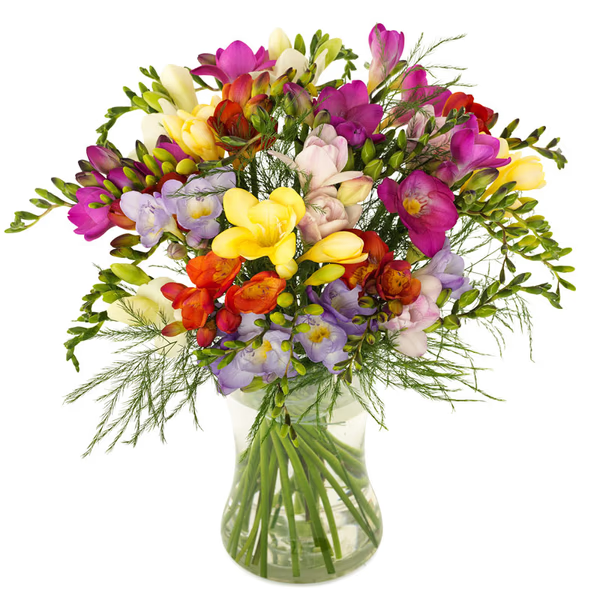
Frezje to delikatne, eleganckie kwiaty o charakterystycznej, dzwonkowatej formie i słodkim, cytrusowym zapachu. Symbolizują przyjaźń, zaufanie i niewinność, dlatego często pojawiają się w bukietach ślubnych i kompozycjach dla bliskich osób. Pochodzą z Południowej Afryki, a dziś uprawiane są na całym świecie - także w Polsce, gdzie szczególnie cenione są za swoją trwałość i aromat. Frezje występują w wielu barwach - od bieli, żółci i różu, po czerwień, fiolet i pomarańcz - co czyni je niezwykle wdzięcznym kwiatem do każdej aranżacji.
COMMON NAME
Freesia
BOTANICAL NAME
Fresia spp.
ORIGIN
South Africa
PEOPLE ALSO CALL IT
Cape Lily
FLOWERING TIME
Spring (March to May)
ASPECT
Full sun to partial shade
SYMBOLISM
Friendship, trust, innocence, thoughtfulness
Przycinanie łodyg: Utnij łodygi pod skosem, aby zwiększyć powierzchnię wchłaniania wody.
Usuwanie liści: Oderwij liście, które mogłyby znaleźć się pod powierzchnią wody - ograniczy to rozwój bakterii.
Letnia woda: Wypełnij wazon letnią wodą i dodaj odżywkę do kwiatów, aby wydłużyć ich świeżość.
Regularna wymiana wody: Zmieniaj wodę co dwa dni, aby zachować czystość i świeżość kwiatów.
Odpowiednie miejsce: Ustaw frezje w chłodnym, jasnym miejscu, z dala od bezpośredniego słońca, kaloryferów i przeciągów.

Frezje to kwiaty, które od wieków kojarzone są z przyjaźnią, lojalnością i wdzięcznością. Ich delikatny zapach i elegancki wygląd sprawiają, że są symbolem czystości uczuć oraz subtelności.
W epoce wiktoriańskiej frezje uznawano za znak zaufania i delikatnej troski. Do dziś są chętnie wręczane jako gest przyjaźni lub uznania. Ich uniwersalne piękno sprawia, że doskonale nadają się zarówno do romantycznych kompozycji, jak i nowoczesnych, minimalistycznych bukietów.
Frezje występują w wielu gatunkach i kolorach, z których każdy ma swój wyjątkowy urok. Frezje pojedyncze mają klasyczny układ sześciu płatków, natomiast frezje pełne zachwycają dodatkowymi warstwami płatków, dzięki czemu wyglądają bardziej okazale. Najczęściej uprawiane odmiany to np. Freesia alba - delikatne, białe kwiaty o subtelnym zapachu, czy Freesia refracta - żółte lub pomarańczowe kwiaty o wyraźnym, świeżym aromacie.
Freesia bulbs (technically corms) should be planted depending on the climate and desired blooming time:
Freesias thrive in cool conditions during their growing season, with ideal temperatures ranging from 13-21°C. Avoid planting during extreme heat or cold for optimal growth.
Choose the right location: Freesias grow best in full sun or light partial shade. Ensure the location has well-draining soil, as freesias do not tolerate waterlogged conditions.
Prepare the soil: Loosen the soil to improve drainage and mix in compost or organic matter to enhance fertility.
Plant the bulbs: Dig holes about 5 cm deep and space the bulbs 5-8 cm apart. Position the bulbs with the pointed end facing upward.
Watering after planting: Water the bulbs lightly immediately after planting to help them settle. During growth, keep the soil evenly moist, but avoid overwatering, which can cause rot.
Provide support: As freesias grow, their stems may become top-heavy with flowers. Consider using small stakes or plant supports to prevent the stems from flopping over.
Freesias are renowned for their intense, sweet, and citrusy fragrance, which is often described as clean, fresh, and floral with subtle fruity undertones. The scent is considered elegant and uplifting, making it highly sought after in perfumes and home fragrances. While the aroma may vary slightly depending on the variety, freesias are universally loved for their distinctive and delightful fragrance.
The blooming period for freesias depends on when the bulbs are planted:
The blooms last for approximately 3-4 weeks, with flowers opening sequentially along the stem. With proper care, their flowering period can be extended slightly.
Freesias are delicate and elegant flowers that grow on slender, arching stems that can reach heights of 30-60 cm. Each stem produces a series of funnel-shaped flowers arranged in a distinctive one-sided cluster, with the flowers opening in sequence from the bottom to the top.
The blooms are available in a wide range of vibrant colors, including white, yellow, orange, pink, red, purple, and blue, often with contrasting hues or markings. Freesias are prized for their bright, cheerful appearance and their ability to add a touch of elegance to gardens and floral arrangements.
The foliage consists of long, narrow, sword-like green leaves, which provide a graceful complement to the colorful flowers.
Freesias are not frost-resistant and cannot survive freezing temperatures. They are considered tender perennials and require protection in colder climates. In regions prone to frost: