Blooming Wonder
Cornflower: The Charming Wildflower of Loyalty and Hope
The cornflower, also known as bachelor’s button, is a classic wildflower admired for its vivid blue petals and delicate, frilly appearance. Native to Europe, it once flourished in cornfields—hence the name—and has long been associated with rural charm and romantic symbolism. In the language of flowers, the cornflower represents loyalty, hope, delicacy, and remembrance. It's beloved in both wildflower-style bouquets and formal arrangements, especially for its striking colour, which symbolises clear thinking and tender devotion.


COMMON NAME
Cornflower, Bachelor's Button

BOTANICAL NAME
Centaurea cyanus

ORIGIN
Europe

PEOPLE ALSO CALL IT
Bluebottle, Boutonnière Flower

FLOWERING TIME
Late spring to summer (May to August)

ASPECT
Full sun, well-drained soil

SYMBOLISM
Loyalty, hope, remembrance, delicacy, devotion
Types of Cornflowers
Most commonly, cornflowers are vivid blue, but there are also varieties in white, pink, purple, and dark burgundy.
Popular types include:
- Centaurea cyanus ‘Blue Boy’ – The classic, intense blue variety.
- ‘Black Ball’ – Deep, almost chocolate-coloured blooms.
- ‘Polka Dot Mix’ – A pastel mix in pink, lavender, blue, and white.
Care Tips for Cut Cornflowers in a Vase
Trim stems at a 45° angle: Use a clean, sharp knife or floral scissors to cut the stems. This increases the surface area for water absorption.
Remove lower leaves: Strip off any foliage that would sit below the waterline to prevent bacteria growth and cloudy water.
Use clean water and floral preservative: Replace the vase water every 2–3 days, and if available, add floral food to prolong freshness.
Keep in a cool, shaded spot: Cornflowers are delicate and sensitive to heat. Avoid placing them near radiators, in direct sun, or next to fruit bowls (which emit ethylene gas).
Remove wilted blooms: Gently pluck off fading flowers to keep the arrangement looking fresh and to encourage longevity for the remaining stems.
Expected vase life: With proper care, cornflowers can last up to 5–7 days.
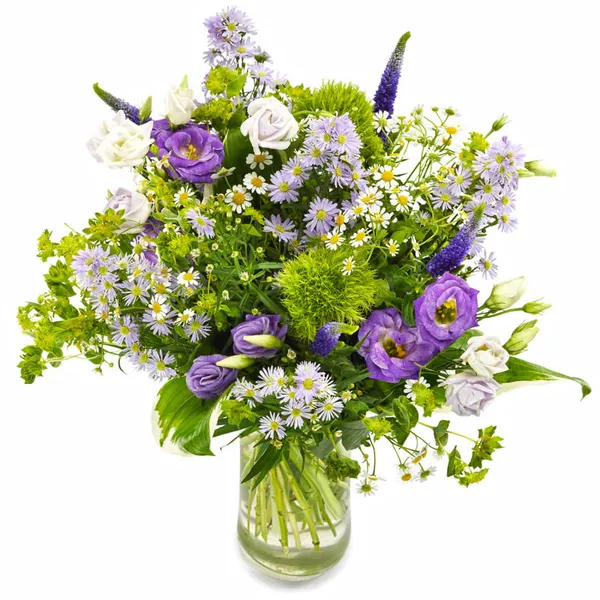
Care Tips for Cornflowers in the Garden or Pot
Sunlight: Cornflowers thrive in full sun. Make sure they get at least 6–8 hours of direct sunlight daily for strong stems and abundant blooms.
Watering: Water moderately but regularly, especially during dry spells. Let the top layer of soil dry slightly between waterings. Avoid overwatering—cornflowers don’t like soggy roots.
Soil: These flowers prefer well-draining, sandy or loamy soil. If planting in pots, use a light potting mix and ensure the container has drainage holes.
Feeding: Cornflowers aren’t heavy feeders, but a light application of balanced fertiliser (e.g., NPK 10-10-10) every 4–6 weeks during the growing season can support blooming.
Deadheading: Regularly remove faded or spent flowers to prolong blooming and encourage new buds. This also prevents unwanted self-seeding if not desired.
Air circulation: Avoid overcrowding plants. Proper spacing improves airflow, reducing the risk of powdery mildew or fungal issues.
Supporting taller varieties: If you grow taller cultivars, consider staking or supporting them to prevent wind damage.
Wintering: In most climates, cornflowers are grown as annuals, but they readily self-seed—leave a few flowers to go to seed if you want them to return next year.
Symbolism & Meaning
Cornflowers are rich in symbolism and folklore. In Romantic-era Europe, they were worn by young men in love—hence the name bachelor’s button—and were believed to wilt quickly if love wasn’t returned. Today, they symbolise faithfulness, optimism, and remembrance, often used in sympathy bouquets or to honour the memory of loved ones. In Germany, the cornflower is also a national symbol, associated with humility and resilience.